

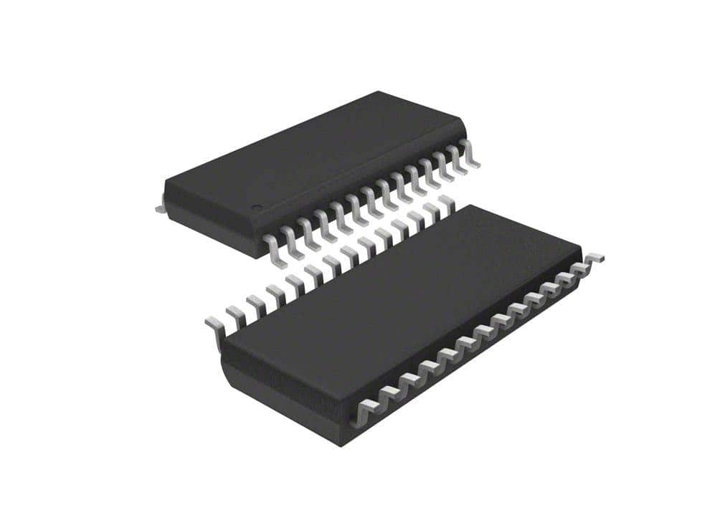
Texas Instruments LMR43620MSC5RPERQ1 Automotive Grade 2A Synchronous Buck Converter
LMR43620MSC5RPERQ1 belongs to TI’s LMR43620-Q1 family of synchronous buck converters for automotive electronics. It is packaged in a 9-pin VQFN-HR HotRod package and delivered in tape and reel format for mass SMT assembly. This power IC is built to withstand harsh automotive operating conditions, supporting an input voltage range from 3V to 36V and a maximum continuous output current of 2A. The part comes with fixed 5V output and also supports adjustable output voltage configuration. The switching frequency is fixed at 2.2MHz, integrated with spread spectrum technology to reduce EMI peaks and help designs comply with CISPR 25 automotive EMC requirements. Its typical quiescent current is only 2.5μA under light load conditions, which drastically cuts standby power consumption for battery-powered vehicle systems. The device supports PFM and FPWM mode selection. Engineers can switch operation modes to balance high light-load efficiency and low output ripple. The junction temperature range spans from -40°C to 150°C. Built-in functions include soft start, power good signal, overcurrent protection, short-circuit protection and thermal shutdown. The HotRod package minimizes parasitic inductance and noise at the switching node, simplifying PCB routing and shrinking the total power solution footprint. Typical applications include body control modules, automotive sensor power supplies, domain controller auxiliary rails and in-vehicle infotainment sub-systems. It is qualified to AEC-Q100 automotive standard, RoHS and REACH compliant. Each reel contains 3000 units for high-volume manufacturing.
| Parameter | Specifications |
|---|---|
| Input Voltage Range | 3V ~ 36V |
| Continuous Output Current | 2A |
| Fixed Output / Adjustable | 5V fixed, adjustable available |
| Switching Frequency | 2.2MHz |
| Package | VQFN-HR RPE 9-pin HotRod |
| Junction Temperature | -40°C ~ +150°C |
| Light Load Quiescent Current | 2.5μA typical |
| Key Features | Spread spectrum, PFM/FPWM selectable, AEC-Q100 qualified |